This implementation renders PDF pages to JPEG images in the browser and uploads the original PDF plus the page images. The HTML viewer loads those images and provides page turning and sharing controls.
Raster page images do not provide an accessible PDF text layer or full-text search. A scanned PDF is still an image document; this pipeline does not perform OCR. Publication HTML defaults to noindex, and a successful conversion does not mean Google has indexed it.
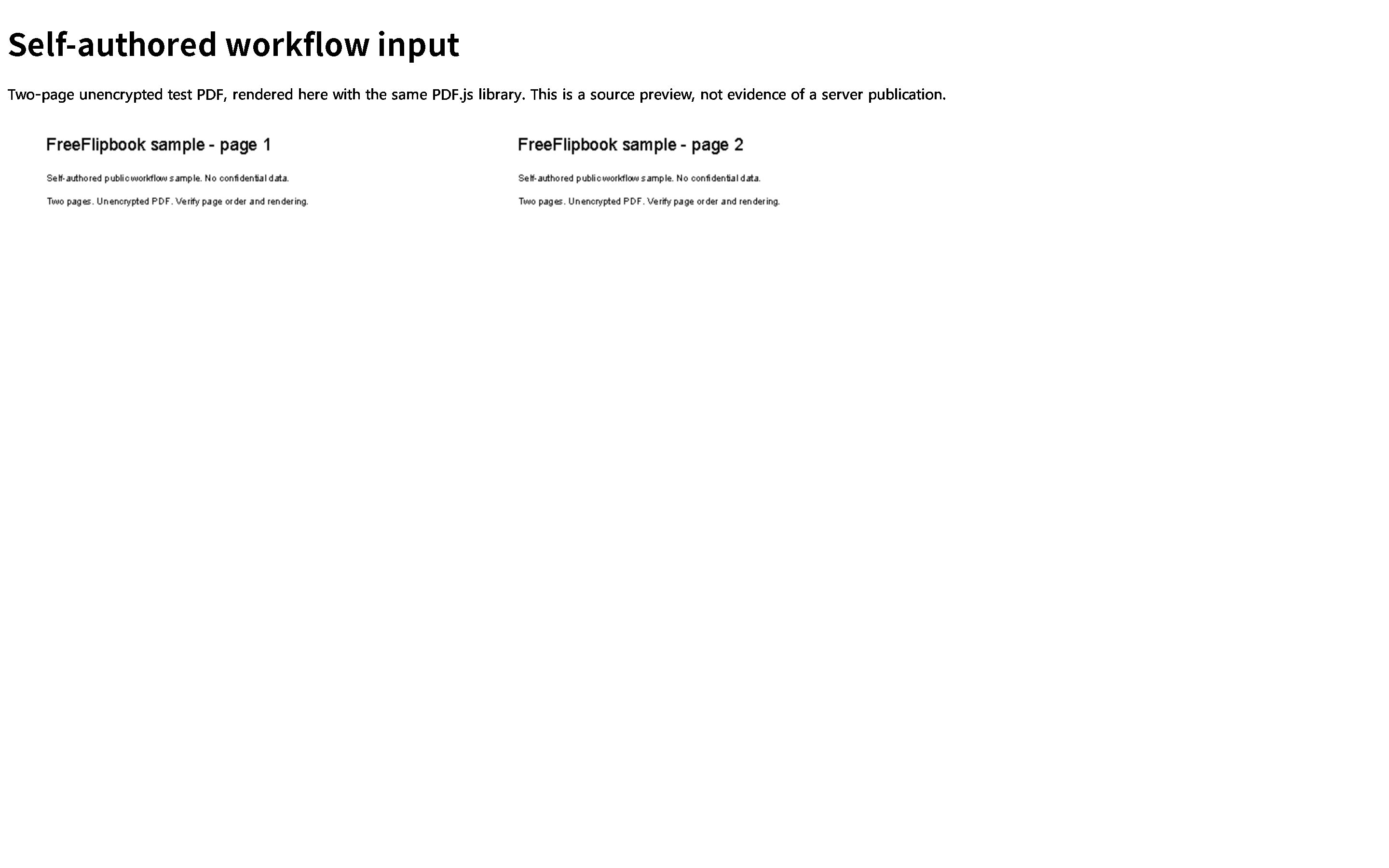
Repeat with our self-authored two-page input PDF. Expected result: two rendered page images in the correct order, a hosted PDF and a working reader after publication. This is a test procedure, not a claim that every device or server environment has passed it. PDF.js input preview.
Input and file handling
5 currently retained publications, 40 pages and 20 MiB per PDF, with 30 days of initial hosting for contact/account-linked Free publications. New anonymous uploads without contact or paid protection are kept for 7 days. Free books have watermarks and advertising. Deleting a publication releases its place in the current publication count.
PDF pages are rendered in your browser. The original PDF and JPEG page images are uploaded and publicly hosted. Do not upload confidential material; knowing a file URL permits access. Published books default to noindex.
Hosting and recovery
New anonymous uploads without a linked account, contact email or paid protection are retained for 7 days from first publication and then scheduled for deletion. Save a contact email or bind the book before that deadline for the normal Free hosting period: 30 days from publication plus a 7-day recovery period. Contact-linked Free publications require a final deletion email and at least 24 hours before cleanup. Existing publications retain their previous policy; legacy automatic expiry deletion remains paused. Active paid entitlements and book passes protect publications. Owners may request deletion. Local scheduling calls an API that rechecks live payment and ownership state.